Philea Forum 2026
From 18-21 May, nearly 900 philanthropy professionals from Europe and around the world convened in Copenhagen for Philea Forum 2026, “Philanthropy for People and Planet”, hosted by a group of Danish foundations.
The theme of people and planet bridges every area of philanthropic work, regardless of place or population. With the multiple serious challenges facing us today – from geopolitical instability to climate change to environmental degradation – the 2026 Philea Forum explored how philanthropic organisations, no matter their missions, have a role to play and levers to use in supporting equitable and just transitions; and how philanthropy can help achieve greater adaptability, resilience, sustainability and shared prosperity while remaining courageous in the face of ongoing setbacks.
“We understand that we sow the seeds of the future and will not be there to see the fruits. The harvest will be left for you. But what we don’t sow today cannot be expected to bear fruit tomorrow. We have work to do, to both level the fields and make them more fertile. We will find the courage to continue to sow, for even as some seeds will fail, others will grow.”
These words formed part of a Letter to Future Generations that emerged from discussions and debates across the three-day event. The letter was read out at the closing plenary of the conference to inspire and empower participants in their work going forward.
In plenaries, topical sessions and networking activities, the Forum provided space for representatives from foundations and philanthropy infrastructure organisations to explore how:
- The transversal theme of people and planet means critical challenges must be treated as interconnected, rather than autonomous, areas of work.
- All philanthropic organisations – regardless of mission, size or form –already have tools, skills, expertise and experience at their disposal to make a real difference in bringing solutions.
- We can move forward from identifying the causes of challenging issues – which in many cases are already well-known – to implementing the solutions, translating insights into initiatives.
- Our behaviour as a sector is critical, not only in terms of what we do but how we do are doing it, particularly given the tensions between maximising financial returns and minimising harm to people and planet.
Setting the scene: Philanthropy for People and Planet
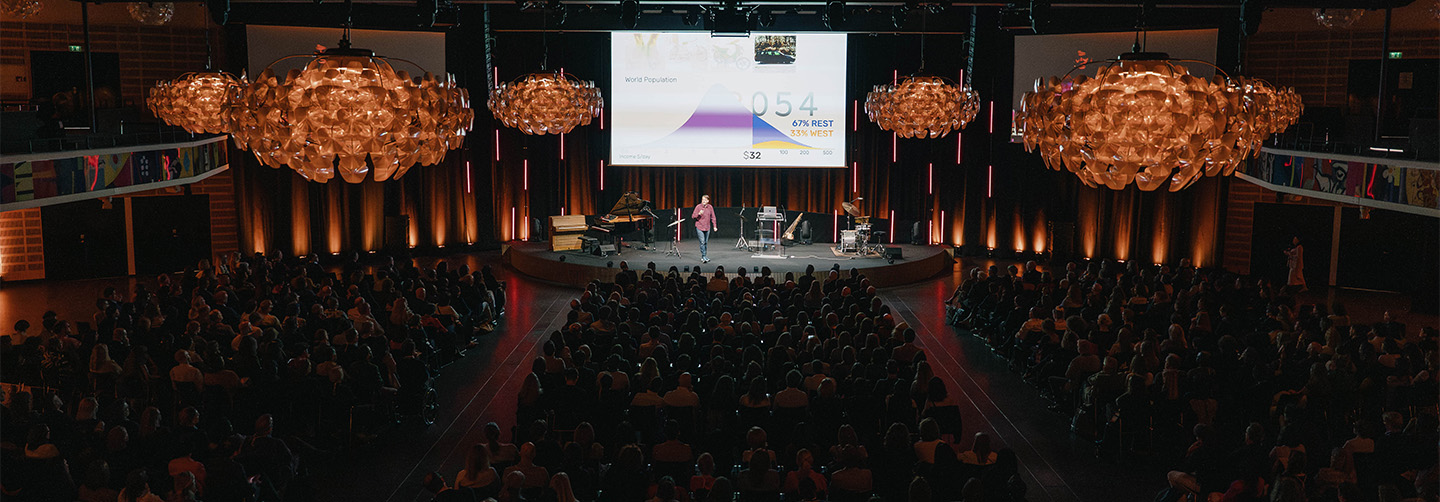
“The pressure on both people and planet is increasing as climate breakdown fuels instability, triggers displacement, and aggravates inequality,” said Philea CEO Delphine Moralis at the Opening Plenary of the Forum. “Many of us undoubtedly struggle, as I personally do, to answer the questions our children ask about the world they will inherit from us. Yet, we as the European philanthropy sector are not here at this conference to dwell on the status quo. We are here because, amid it all, we choose to lean into possibility.”
Àngel Font of “la Caixa” Foundation and outgoing President of Philea, said in his speech at the Opening Plenary: “My six years as president, which began during a global pandemic, end with a set of planetary challenges both old and new, both perennial and evergreen, and which require our sector to be at our most creative, adaptable and efficient best.”
Philea’s new President, Liisa Suvikumpu of the Finnish Association of Foundations, also addressed the delegates at the Opening: “Wisdom and hope do not only live in our history or in our great institutions; they live in the new voices and the new generations – the very people we are here to serve. Let’s create that hope together.”
Keynote speakers at the Opening Plenary included: Joshua Amponsem, Co-Executive Director of the Youth Climate Justice Fund; Mariana Mazzucato, Professor in the Economics of Innovation and Public Value at University College London (UCL), Founding Director of the UCL Institute for Innovation & Public Purpose; Ola Rosling, President of the Gapminder Foundation, which he co-founded with his wife, Anna, and his father, Hans; and Margrethe Vestager, Danish politician, Chair of the Board of Governors at the Technical University of Denmark.
The keynote speakers shared the following main points:
- Climate and ecological breakdown are already affecting people and communities directly, deepening inequality, instability, displacement, and pressure on democratic and civic space.
- Despite the severity of the crisis, there are real signs of progress and agency: global development indicators have improved over time, and meaningful climate action is already happening in many places.
- Philanthropy should move beyond simply filling gaps after the fact and instead help reshape economic systems, institutions, and incentives so that economies work for people, planet, and the common good from the start.
- Data and facts matter because public understanding is often distorted by negative, dramatic narratives that are in contradiction of facts; better decisions require confronting misconceptions and grounding action in evidence so that we can share stories of how humans are capable of finding solutions to complex problems.
- Climate, biodiversity, health, water, democracy and inequality are deeply interconnected, so siloed approaches are inadequate for addressing the scale and complexity of the challenges.
- Real change requires courage, long-term thinking, collaboration and a willingness for philanthropy to get out of its comfort zone and question its own assumptions, language and power structures.
- Lived experience should be treated as a strategic asset: communities closest to the impacts often understand complexity best and should help shape priorities, funding decisions and solutions.
- Building agency and collective action is essential, including through innovative democratic and digital infrastructures that help people organise, participate, and act together rather than feel fragmented or powerless as current social media platforms do.
- A highlight of the Opening session was an immersive experience combining music and images created and performed by August Rosenbaum, Danish pianist and composer.
Opening Plenary recordings
Every foundation has a role to play: From broad themes to practical pathways
Through a range of sessions, breakouts, debates and site visits during the Forum, participants explored and discovered how climate and environment not only impact all they do, but how all philanthropic organisations can contribute.
The discussions kicked off on Members Day with a session on mainstreaming climate and environment in philanthropy, which explored how climate and environmental concerns can be meaningfully embedded across all aspects of a foundation’s work – beyond standalone programmes or portfolios. Foundations shared how they are rethinking strategies, operations, governance and partnerships in response to the climate and environmental crises.
The day also included a screening of the documentary, “Fire, Water, Earth, Air”, directed by award-winning Danish filmmaker Phie Ambo, in collaboration with Ewa Cederstam, Janne Lindgren, and Rógvi Rasmussen. Following the screening, participants learned about climate storytelling trends in public, corporate and social media, reflecting on big hits across story genres and journalism in the last 12 months and their common narrative properties.
During the following two days, participants engaged in conversations that ranged in focus from high-level themes to concrete methods of acting on environment and climate:
1) The Forum offered a space to explore the larger themes of climate and environment, including:
- Just transition as a framework connecting climate action with democracy, social justice, public trust and systemic change
- Planetary futures and regenerative models, including climate, nature, biodiversity and more resilient social systems
- Urban, civic and community transitions, from inclusive city ecosystems and democratic public spaces to neighbourhood-based sustainability
- Food systems, migration and labour as climate-linked issues, showing how environmental change intersects with livelihoods, belonging and social cohesion
- Health, science and innovation, including bioscience, mental health, STEM learning and human and planetary health
- The role of culture, arts and media in shaping public narratives, imagination and collective responses to climate and environmental crises
- Practical inclusion of groups often left out of climate and environmental debates, including youth, people with disabilities, frontline communities and socially vulnerable groups
2) Participants debated how these themes interact with philanthropy’s practices and mindsets, including:
- How philanthropy can move beyond siloed, short-term funding toward cross-sector, systems-based and long-term collaboration
- What it means to centre justice, equity and belonging in climate philanthropy, rather than treating them as peripheral concerns
- How foundations should respond to shrinking civic space, polarisation and political pressure without retreating into neutrality or self-censorship
- How funding relationships can shift power by backing community-led, youth-led and local approaches grounded in lived experience
- The need to align grantmaking, organisational culture, governance and investment practices with climate and environmental goals
- How philanthropy can build trust, credibility and resilience through peer learning, infrastructure, shared reporting and collective action
- How emerging tools such as foresight, AI, systems thinking and evidence-based learning can support more responsible and effective practice
3) Participants dived into the nuts and bolts, exploring the many entry points for this work by sharing and learning from each other around:
- Case studies of place-based practice, including site visits to learning labs, community hubs, hospitals, parks, housing areas, theatres and innovation centres
- Methods for coalition-building, organisational development and participatory governance that strengthen movements and local ecosystems
- Concrete funding approaches such as pooled funding, mission-aligned investing, public-private partnerships and support for experimentation
- Practical tools for monitoring, evaluation and learning, including systems-aware MEL, futures methods and evidence-based strategy design
- Approaches to inclusive programme design, from emergency preparedness and accessibility to engaging underrepresented communities in nature, culture and democracy
- Narrative, communications and media strategies that help foundations connect climate action to everyday concerns and counter fragmentation
- Operational enablers such as shared reporting standards, responsible AI use, data practices and peer exchange frameworks that can improve implementation
Going forward with collective courage
The Closing Plenary brought voices from across the conference into conversation, reflecting on key takeaways and shared responsibilities. Through dialogue, leadership perspectives and a collective moment of reflection, the Forum closed by looking ahead – together.
Key takeaways:
- Philanthropy cannot respond to climate and environmental crises in isolation. The challenges are systemic and interconnected, so the response must be collective, relational and grounded in shared responsibility.
- Those closest to the issues are often best placed to shape viable solutions. Philanthropy should listen more deeply to communities, movements and practitioners, and back approaches that recognise complexity rather than impose one-size-fits-all answers.
- Trust, communication and bridge-building are essential conditions for action. Working across institutions, sectors and movements takes time, but it creates shared understanding, joint purpose and durable collaboration.
- Climate action is not only a technical question but also a relational and political one. Philanthropy must do more than fund projects: It must convene, connect and help people act together across ecosystems.
- Philanthropy needs to move beyond narrow project funding and short-term silos. Flexible, core and trust-based funding is critical to support systemic change, resilience and long-term transformation.
- Philanthropy should use all of its tools, not only grantmaking. That includes aligning endowments and investment practices with mission, asking whether assets do harm, and deploying more capital in ways that support the common good.
- Philanthropic organisations should integrate climate across the whole organisation, from strategy and partnerships to operations, procurement and internal decision-making. Applying a climate lens consistently is an organisational discipline, not a standalone programme area.
- Climate cannot be separated from inequality, democracy and people’s daily realities. To build public legitimacy, philanthropy must stay close to communities, respond to concrete needs and show how climate action connects to security, housing, livelihoods and fairness.
- Indigenous perspectives are essential to reimagining philanthropy. Their holistic, intergenerational and relational approaches point towards longer-term, more accountable ways of working that centre equity, reciprocity and partnership.
- Gender justice is central to climate action because the climate crisis deepens existing inequalities and disproportionately affects those already marginalised.
- Philanthropy should fund climate and gender work together, strengthen feminist movements and recognise trust as part of the infrastructure for change.
- Transparency strengthens accountability, but philanthropy should clarify not only how much it funds, but also how it makes decisions and where power sits.
- Participatory approaches that shift power can resource communities and movements more effectively.
- Philanthropy must be bolder, take more risks and act together with greater determination, embracing collective courage.
These takeaways were shared by the following speakers in a Q & A format moderated by Delphine Moralis, Chief Executive Officer of Philea; and Hanne Rasmussen, CEO of The Knowledge Centre for Danish Foundations:
- Andrea Chiara Brancale, Assifero
- Andwele Bryan, Children’s Investment Fund Foundation
- Matthieu Calame, Fondation Charles Léopold Mayer
- Maria Alejandra Escalante, Collective Abundance
- Lourdes Inga, Indigenous Funders for Indigenous People
- Tabea Lissner, Bosch Stiftung GmbH
The following panel of CEOs also shared their takeaways:
- Nadejda Dermendjieva, Bulgarian Fund for Women (BFW)
- Douglas Griffiths, Oak Foundation
- Sergio Urbani, Fondazione Cariplo
Letter to Future Generations
The conference closed with a based on input gathered from participants across the three days of the conference. The letter was read out at the closing plenary by:
- Carola Carrazzone, Assifero, outgoing Philea Vice-President
- Àngel Font, “la Caixa” Foundation, outgoing Philea President
- Christina Lambropoulou, Stavros Niarchos Foundation, outgoing Philea Treasurer
“By the time you read this, we will have been the change you wanted to see. Our planet is now your planet. Our communities are now your communities. Please look after them both. They aren’t yours forever any more than they are ours.”
– Excerpt from Letter to Future Generations
Around the conference
New publications on climate and environment featured at the Forum
Environmental Funding by European Foundations – Volume 7
This report, published by Philea, is the most comprehensive report to date on environmental philanthropy in Europe. The report is based on 2024 grants data from 169 of the largest environmental foundations in Europe. The mapping analyses the 9,488 environmental grants made in 2024 by these foundations, worth a combined €2.2 billion. This volume builds on the six earlier editions of this research, significantly increasing the number and value of grants being analysed.
International Philanthropy Commitment on Climate Change: Progress Report 2
Across the world, despite a challenging context, foundations are making measurable progress on climate. This report, published by WINGS and Philea, focuses on progress made by signatories to the International Philanthropy Commitment on Climate Change to integrate climate across their work and translate the commitment into institutional change.
Reflect and Connect
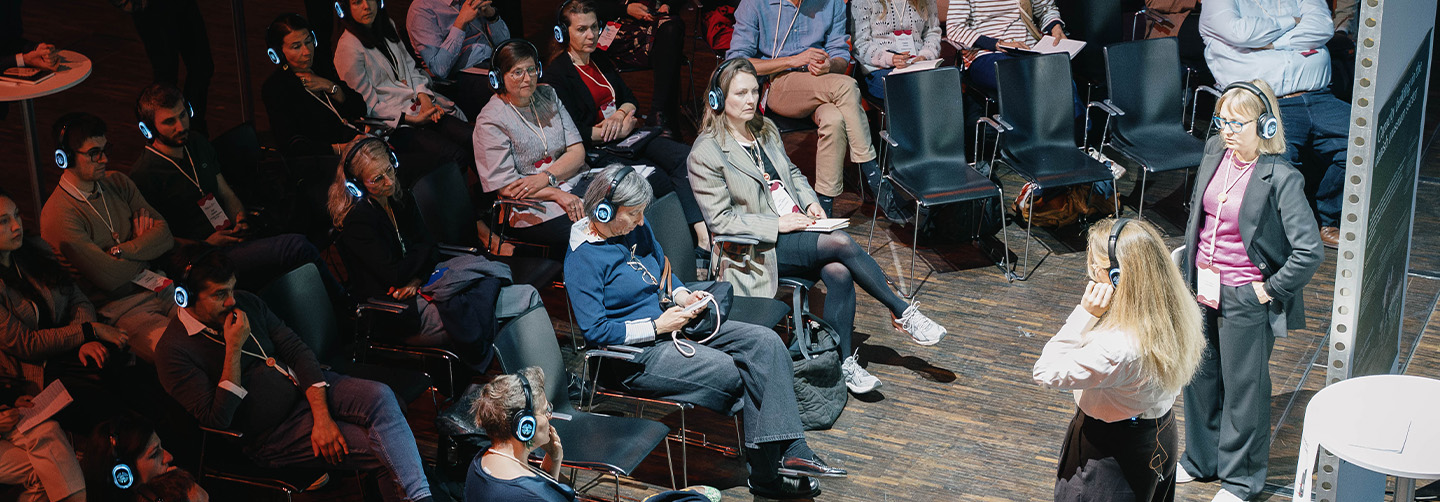
The Reflect and Connect sessions took place immediately after the Opening Plenary and created a space for participants to deepen the ideas raised by the plenary speakers through conversation and shared reflection. Each session was anchored by one of the Opening Plenary speakers and began with informal introductions that helped participants connect across countries, organisations and personal experiences. A short collective reflection captured the main messages, emotions and questions that had emerged from the talks, offering a live snapshot of what had resonated most strongly across the room.
Participants explored how the talks connected to their own experience, where they agreed or disagreed, and which ideas had inspired or challenged their thinking. The sessions concluded with a reflective exercise inviting participants to write short messages to future generations, considering the kind of future they hoped their work would help create, the responsibilities philanthropy holds towards people and planet, and the changes still needed. These messages fed into the Letter to Future Generations mentioned above.
A first for the Forum: Documentary screenings
For the first time, throughout the conference the Forum included film and documentary screenings, which added another layer to the conversation, bringing stories of climate action, community resilience, social impact, and sustainable futures into the programme. Across several screening moments during the conference, participants were invited to engage with a curated selection of films and documentaries supported by philanthropic organisations and foundations working on climate, social justice, and sustainability.
Among the featured screenings was “Fire, Water, Earth, Air”, directed by award-winning Danish Director Phie Ambo, in collaboration with Ewa Cederstam, Janne Lindgren, and Rógvi Rasmussen and supported through Doc Society. The film explored climate change, preparedness, community resilience, and the relationship between people and nature through stories from Nordic communities. A selection of short films from the Sabancı Foundation’s “Short Film, Long Impact” initiative were also screened. Together, these films addressed topics such as climate change, climate migration, water scarcity, and broader social challenges: “Cansuyu – Water is Life” by Anıl Gök; “Taze Süt – Fresh Milk” by Ömer Faruk Güler; “Düşlerdeki Hayat – Life in Dreams” by Can Yeşiloğlu; and “Son Yuva – The Last Nest” by Hasan Hüseyin Alkan.
Screenings also included “Humanising Energy”, supported by the European Climate Foundation, which focused on local energy cooperatives in Belgium; and “Our Future: Built by Nature”, produced by Open Planet Studios for Built by Nature, examined how the construction sector can reduce emissions through timber and biobased materials.
Agora and Elephant at the Table
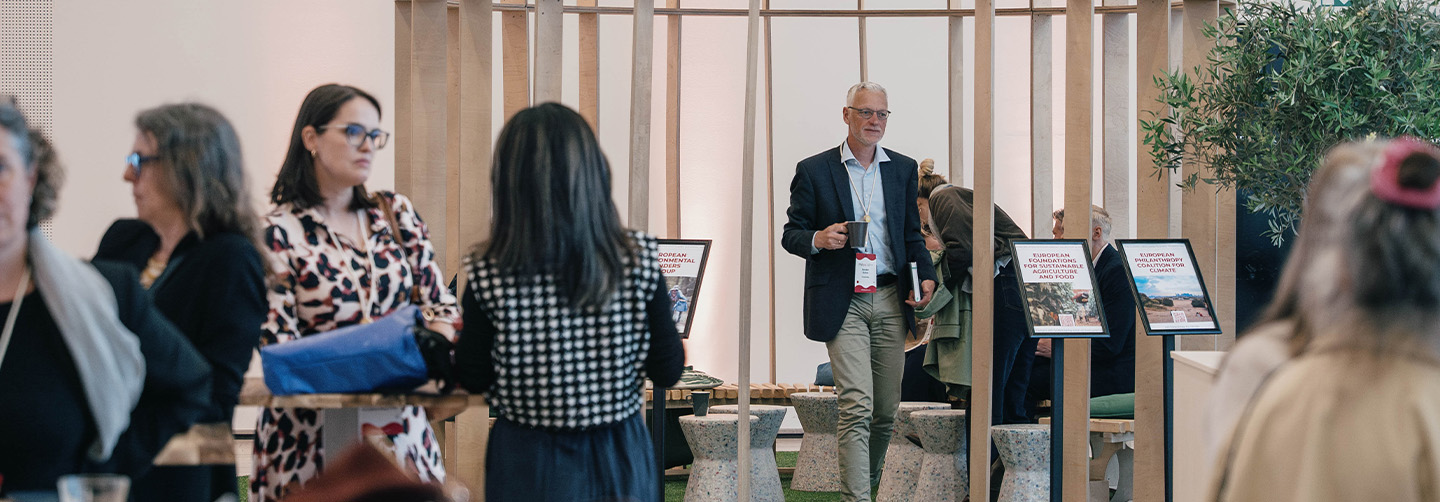
The Agora poster session ran alongside the network-led topical sessions and offered Full Philea Members a space to share their work directly with peers, covering new initiatives, lessons from successes and failures, organisational changes, and practical methods that others could learn from and adapt.
The Elephant at the Table session offered an interactive roundtable space for candid conversation on some of the sector’s toughest systemic challenges. Guided by peers from different roles and experiences, participants reflected on issues such as power, funding, advocacy, and systems change while exploring practical ideas for stronger collaboration across philanthropy.
Music at the Forum
Several performances across the conference brought together world music, harp, and jazz in a way that reflected both artistic excellence and cultural diversity. Performances ranged from the Bilal Irshed Trio’s blend of Middle Eastern, Afro-Cuban, and Scandinavian jazz influences, to the expressive harp of Vianne Cathérine Sali and the intimate jazz interpretations of the Camille Jones Jazz Trio, creating a warm and memorable musical atmosphere throughout the event.
Thank you
Thanks to all of the plenary speakers who brought their insights, inspiration and talent to the Forum; and the many session speakers and moderators who gave their time, energy and expertise. We also thank all the performers who brought music to the conference.
A very special thank you to the outgoing members of the Board of Directors, Nominations and Governance Committee, and Advisory Committee. We deeply appreciate your unwavering commitment to Philea, and all of your efforts on behalf of the organisation.
Host foundations
We would like to extend our sincere gratitude to the foundations that hosted the Forum 2026 for all of their hard work, dedication and incredible support. The Forum simply could not have happened without the commitment of these organisations:
- Augustinus Foundation
- Bikuben Foundation
- Carlsberg Foundation
- Grundfos Foundation
- Hempel Foundation
- Knowledge Centre for Danish Foundations
- Lego Foundation
- Leo Foundation
- Lundbeck Foundation
- Nordea-fonden
- Nordic Culture Fund
- Novo Nordisk Foundation
- Ramboll Foundation
- Realdania
- Trygfonden
- Velux Foundation
- Villum Foundation

Contact