How Foundations Can Integrate Equity and Justice in Their Climate Journeys
Section
The impacts of climate change are felt in every region of the world. But some communities are hit harder than others, not because they are inherently vulnerable, but because systems of discrimination and exclusion have made them more exposed.
Disproportionate impacts stem from structural inequalities
Economic injustice, colonial legacies, racism, ableism, gender inequality, cultural marginalisation, as well as the unequal distribution of power, resources and decision-making are all injustices that not only increase exposure to climate risks, but also shape who has the means, the voice and the power to respond and recover. People experience the impacts of climate change more acutely because of these factors, and even more so when they overlap.
What does this mean for philanthropy?
Philanthropy has power to tackle the climate crisis and social injustice through its agility, independence, convening power, and resources. For those working on social injustices, it’s important to think about how climate change is exacerbating existing inequalities. For those working on climate, it is crucial to tackle the root causes that make these impacts so unequal. For foundations working on other topics, integrating a climate justice lens into your work can lead to better and more long-term outcomes.
The Community Foundation Ireland understands that its mission of “equality for all in thriving communities” cannot be achieved without addressing the climate crisis. Climate change and its impacts are threat multipliers for vulnerable populations in Ireland, such as senior citizens, migrant communities and low-income families. In line with its mission, Community Foundation Ireland addresses climate change as a fundamental equality issue by funding immediate action to support vulnerable communities, and supporting systemic change through advocacy, research and policy interventions.
Moving away from thinking about issue areas in silos and instead starting from the basis of values, can reveal unexpected solutions: For example, building strong social connections and trust in a community is one of the most powerful ways to foster climate resilience.
Understanding key concepts
Philea’s “Philanthropy and Equality: A Framework for Sharing Power and Addressing Inequalities” offers a deep dive into the relationship between philanthropy and equality:
- Equality means giving everyone the same resources, support or opportunities no matter their background or needs.
- Equity means making sure everyone gets what they need to succeed, not by giving everyone the same thing, but by recognising different starting points and helping to close those gaps.
- Justice is the concept that people should be treated fairly, whether under the law or in society. But it goes further than fairness to include correcting past and present unfairness, removing the barriers and fixing the systems that created the injustice in the first place.
Just transition
A just transition acknowledges that, in any transition, benefits often accrue to those who are already privileged. As we move toward a less fossil fuel-based future, it is essential to ensure that workers and communities who have historically depended on extractive industries for their livelihoods – or who are already marginalised – are not left behind. A just transition connects justice and equity by redistributing benefits and opportunities, and by building inclusive, resilient futures.
Foundation Scotland hosts the “Regenerative Futures Fund”, a ten-year community fund for the city of Edinburgh which puts decision-making power into the hands of those who are most often excluded. It supports approaches that improve the lives of local people living in poverty and experiencing racism and that contribute towards a just, green transition by enabling equity and power-sharing. The funding it distributes gives grass-roots organisations and movements the opportunity to think and plan for the long term, tackling the root causes of poverty, racism and the environmental crisis.
The Laudes Foundation focuses on accelerating a just transition across four industries: fashion; the built environment; finance and capital markets; and food. The foundation understands that without a focus on equity, the climate transition risks deepening existing inequalities. Its strategy reflects a clear commitment to ensuring that those most affected by industry change, such as workers, producers and residents, are not only protected but empowered and able to participate in decision-making. This is demonstrated through the foundation’s support for the Employment Injury Scheme, the Ready-Made Garment Workers’ Forum and the Institute for Human Rights and Business. The foundation has invested in strengthening the just transition ecosystem for example by supporting a mapping and trend analysis on just transition initiatives which identifies a number of so-called “acupuncture pressure points” and explores the role of philanthropy as well as donor collaboratives, such as the Just Transition Donor Alliance, a learning and action space for philanthropic funders.
From words to values
These terms are not always easily understood, accessible or even politically safe to use in all the contexts that we’re working in. It is important to focus on the underlying values behind these concepts, not just the words – because language can be used to sow division. The values that underpin these ideas, like fairness, inclusion and opportunities, can help bridge such divides and create hope.
Learning from philanthropy practitioners
Justice and equity are context specific
These concepts are not abstract ideals, rather they are fundamentally shaped by local realities.
Philanthropy must understand and respond to the specific social, economic, and historical contexts in which climate impacts unfold. This requires engaging deeply with place-based knowledge and lived experience.
- The health impacts from climate change vary significantly across geographies and are experienced differently depending on the unique characteristics of different local communities. Foundation S works in partnership with local actors to deliver solutions that are context specific and create a healthier future for underserved communities for whom the impacts of global warming threaten the provision, accessibility and availability of essential health services. The foundation centres the experience and knowledge of local communities across its work – from its funding portfolio to its policy advocacy. By enabling local communities to drive change, Foundation S ensures the long-term sustainability of its work.
- Sicily is a climate hotspot, with 70% of its territory at risk of desertification. It also faces persistent socio-economic inequality due to its high rate of unemployment and its role as a major arrival port for migrants to Europe. The MeSSiNa Foundation, a community foundation deeply embedded in this context, has a hands-on understanding of how the most socially vulnerable also face the most extreme impacts of climate change. The foundation integrates local knowledge and participatory governance to design and implement ecosystemic and local sustainable development policies that effectively address the complex interconnections between poverty, inequality and climate change.
Language and framing matter
The way we talk about climate and justice shapes how people engage with it. Climate jargon like “mitigation” and “adaptation” can alienate communities and even philanthropic colleagues.
In diverse contexts, value-based language, rooted in fairness, accessibility and opportunity, can be more effective in building trust and engagement.
For example, instead of saying, “We need to invest in climate mitigation and adaptation,” we might say, “We can support communities to create healthier, safer environments, taking the unequal impacts of climate change into account and safeguarding our children’s future.” Foundations are encouraged to rethink how they communicate about climate, ensuring that their framing resonates with those they aim to support. Framing Climate Justice and Climate Outreach offer valuable resources for thinking this through.
Climate justice is a process, not an outcome
Justice in climate philanthropy is as much about how we work as what we fund. A climate justice approach doesn’t just deliver for communities; it builds with them.
This calls for a broader reflection on how we do philanthropy and whose voices we centre. It requires us to ask ourselves some hard questions like:
- Are we listening to how communities define what climate justice means in their own context, or are we forcing them to tick boxes that align with our own pre-existing ideas?
- Are we giving from a place of openness, trust, and flexibility, or from a position of control, short-termism and risk aversion?
Climate justice requires new philanthropic practices
Philanthropy can shift power through participatory approaches, supporting community-defined solutions, and embrace ecosystemic strategies that address climate change and social inequalities together. Specialised pooled funds can allow funders to experiment with and apply these approaches.
There is a growing number of intermediaries and pooled funds working towards climate justice, many of which you can read about in our report “Philanthropy Infrastructure and Climate Change: Supporting the Ecosystem to Act,” including:
- Collective Abundance
- The Climate and Land Use Alliance
- The Climate Justice & Just Transition Collaborative
- The Climate Justice Resilience Fund
- The Youth Climate Justice Fund
- Global Greengrants Fund
- …
The Robert Bosch Stiftung started working on climate in 2020 under its global issues programme. As part of its strategy to facilitate a socially just and ecological transformation of land use, it supports the Climate Justice Resilience Fund which enables women, youth and indigenous peoples to create and share their solutions for climate resilience, primarily in the North American Arctic, East Africa and Bangladesh. In 2022, this fund transitioned from a funder-led governance model to a practitioner and activist-led governing board creating a departure from “business-as-usual” philanthropy to embody the systems change that it aims for. For the Robert Bosch Stiftung, participation in this pooled fund allows them to deploy funding to communities most impacted by climate change, create a better impact by leveraging funding from different philanthropies, and learn alongside peer funders, experts and the communities supported.
Considering your next steps
- How can you engage with climate justice and a just transition in a way that reflects your organisational values, and builds on your assets, relationships, profile and expertise?
- Is there a particular aspect of climate justice and a just transition which your foundation would be well placed to address, building on your existing expertise and experience?
- What do your internal and external stakeholders expect or hope that you will do in terms of acting on climate justice and a just transition? Where might there be reputational risks from acting, or not acting?
- Are there opportunities to establish or redesign a programme that meets climate justice and other philanthropic goals together, maximising the co-benefits?
Recommended reading
- Philea, “How to Integrate Climate into Your Philanthropic Programmes: What Foundations Need to Know and Where to Start” (2025)
- Fondation de France, “Philanthropy in a Changing Climate: Challenges and Perspectives for a Just Transition” (2025)
- Impatience Earth, Philanthropy’s Blind Spot: 6 Reasons Why We Need to Increase Quality Funding to the Global South
- EDGE Funders, “Beyond 2%: From climate philanthropy to climate justice philanthropy” (2022)
- Ariadne and Candid, “Centring Equity and Justice in Climate Philanthropy” (2022)
About the European Philanthropy Coalition for Climate
Philea’s European Philanthropy Coalition for Climate (Climate Coalition) believes that all foundations and philanthropic organisations, regardless of their mission, can and should commit to meaningful climate action. Since 2021, the Climate Coalition has worked in partnership with WINGS to launch and scale the global Philanthropy For Climate movement and the International Philanthropy Commitment on Climate Change. The Climate Coalition offers philanthropic organisations peer-exchange and learning opportunities, as well as practical resources, to support them in their climate journey.
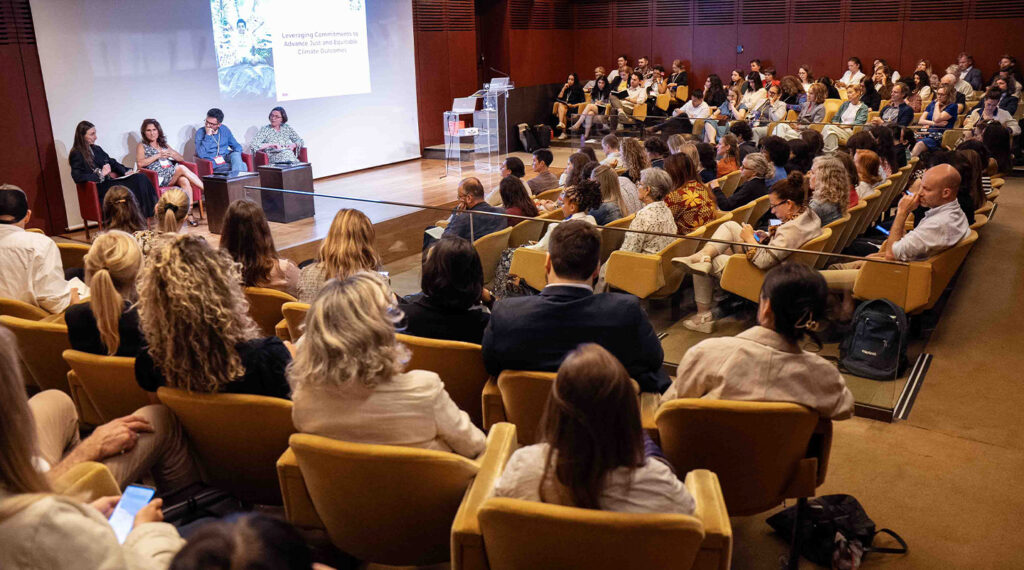
These reflections are based on the session “Leveraging Commitments for Just and Equitable Climate Outcomes” at the Philea Forum 2025 and draw significantly on the expertise and facilitation of Yasmin Ahammad, Impatience Earth, whose contributions to the Philea Forum session and ongoing work in the field are deeply appreciated.
Contact