Why philanthropy needs the next generation now
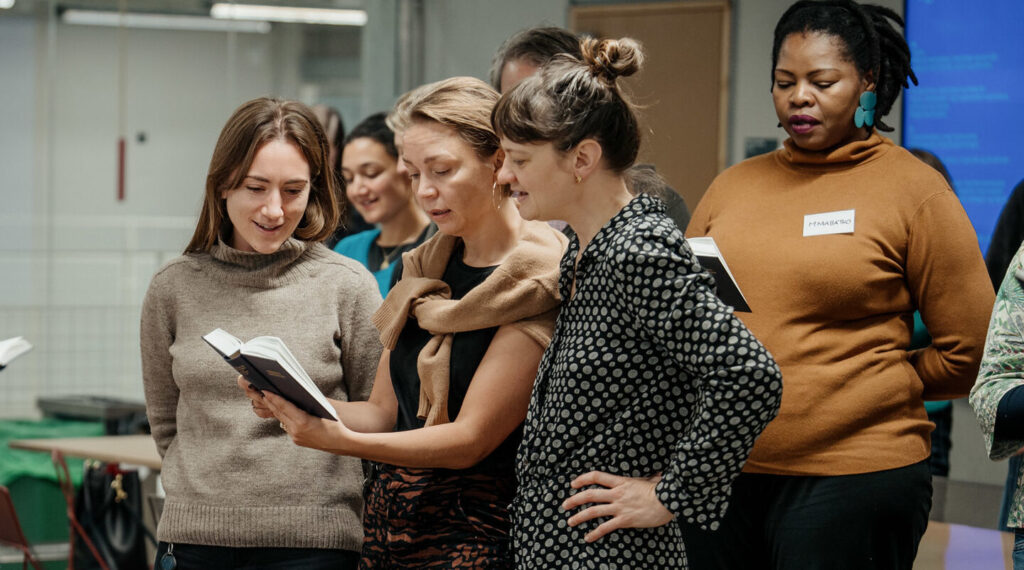
As a young professional in philanthropy, I have often asked myself how I can deepen my insights in this field. How can I ascertain the skills needed to build a mission- and purpose-driven career for the common good? What resources are out there that I can trust to help me grow? How can I prove myself and what environment will allow me to do this?
There can be a feeling that the mountain of information is too large and, as a young professional, you are still getting a sense of the knowledge others have sharpened for years. Although young professionals entering the job market are curious and eager to learn, the question of what you bring as a professional that is learning and developing the experience needed can be hard to answer. Working with Philea’s Generation Now programme, I have seen first-hand how young professionals can bring so much curiosity and passion for the work they do and a willingness to work hard to improve and innovate for the better.
Asking questions and trying to understand the inner workings of a workplace and field can be exciting but this is only possible with meaningful youth engagement. Meaningful learning and development opportunities allow junior professionals to build the skills needed to bridge the gap between the academic world and the work world and to connect to the relationships that are essential for their success. Seeing those with more experience and the value they bring through mentorship is exceptional. These intergenerational relationships in the workplace offer a space for those with more experience to transfer their knowledge to younger generations with their own skills as we face ever-growing challenges. One thing is clear, young professionals may be the future leaders in philanthropy, but they are already here.
The superpowers of young professionals
One of the unique added values of young professionals is their sense of curiosity and eagerness. Young professionals have the fresh eyes of an outsider, yet they are free from the experience of roadblocks and past processes. Young professionals are eager to leave their mark by contributing to the field and proving they are capable of lasting impact in the long run. This allows for innovation and new pathways that now seem possible without the barriers ingrained in their mind. They can imagine a new tomorrow and envision how they can change what they will inherit.
Young professionals also bring new ideas shaped by emerging social trends, digital culture and youth priorities that allow for organisations to stay relevant and agile as the world shifts at a pace that is unprecedented. For many young people, the first election of Donald Trump and Brexit happened in our teens and a global pandemic shaped our college years. We entered the workforce as wars erupted all over the world and saw old patterns of cooperation melt as the might makes right narrative dominated the geopolitical stage. This means that young people are forged in a world that demands agility, flexibility and recalculation at every turn. The younger generation is inheriting this world now and ‘’building new forms of community, organising across borders, questioning assumptions that failed their predecessors, and developing the capabilities required to navigate cascading crises“. For the world of philanthropy and the many challenges it faces, this agility is not only an added value but a necessity.
Young people are motivated to build a better future but, more than that, they are needed more than ever. As it stands now in Europe, we are facing an aging population and ‘’proportion of individuals aged 80 or above in the EU’s population is projected to see a 2.5-fold increase between 2024 and 2100, from 6.1% to 15.3%“. According to the International Labour Organisation, this means that by 2050 ’’Europe and Central Asia will have around 10 million fewer workers, as populations age, fertility rates stay low, and fewer young people enter the labour market”. The biggest challenge it seems for organisations will be retaining talent at all levels by investing in early career professionals and encouraging older workers to stay active longer.
How to support young professionals?
In order to meet the challenges of our times, whether demographic or crisis related, organisations will need to attract the younger generation. In the United States for the next five years ‘’US employers will need to hire, on average, more than 240,000 people a month just to fill the gaps that these departing employees will leave“ stating that ‘’Investing in early talent is no longer just a good idea”. As Blanca Juti, Chief Corporate Affairs and Engagement Officer of L’Oréal put it, ”companies that attract the best young talent will be the ones that fulfil their aspirations for purposeful work and possibility to truly contribute”. That being said, the question remains of what this engagement of young professionals truly looks like to unlock their innovative, curious and adaptable spirits.
In order to uplift young professionals, it is important to understand that they are learning as they go and without meaningful learning opportunities they are not being set up for success. Meaningful engagement of young professionals requires not just a symbolic act or asking them to take notes but ‘’recognising the potential for innovation and fresh thinking they bring“ and co-creating decisions with them. In an article from Forbes entitled 20 Ways Non-profit Leaders Can Support Younger Employees’ Professional Development, they describe the strategies to listen to young professionals and guide their development while increasing the impact in your organisation. One of the major takeaways is that structured advancement pathways and mentorship programmes with knowledge transmission help junior employees feel supported and valued, which is crucial for retention and succession planning. In fact, it is clear for Gen Z that ‘’72% would leave a job that lacked development opportunities“ and ‘’72% say having satisfying job duties is more important than salary”.
Supporting this generation is about more than giving them a platform and walking away. Community and shared vision are one of the most powerful tools towards our goals and it is not possible without each generation working together to build towards a better future. Everyone remembers that one person that took a chance on you when you felt the world had turned its back. The boss that gave you an internship or the colleague that wanted your perspective when you felt that your voice didn’t matter. Meaningful engagement for young professionals is about acknowledging what they can bring to the table and giving them the platform to make that happen with you. What makes engagement meaningful is the care and compassion between generations and the knowledge that those with more experience can impart. As time progresses, the crises we face will only escalate as climate change accelerates extreme weather events, the political scene becomes more volatile and inequalities rise. Investing in the younger generation is investing in our shared resilience in the face of these uncertain times.
Authors