What if philanthropy’s biggest risk is being late?
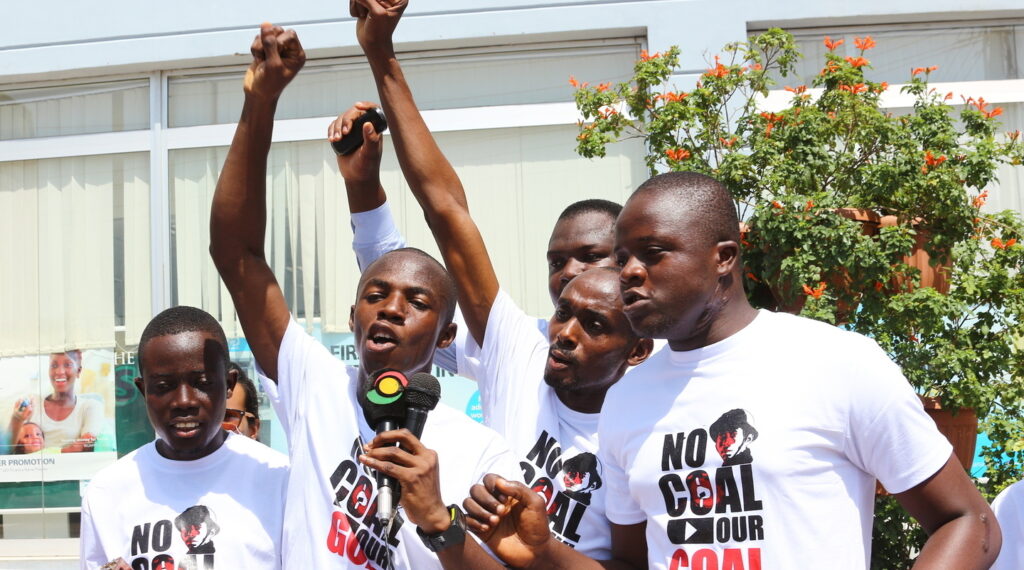
I was in university when I first learned about climate change and started a student movement in response. We worked on coastal erosion, deforestation, organic waste, wetlands, livelihoods and energy access at the same time because that is how climate change showed up in our lives.
When we approached funders, the recurring question was: which strategic bucket does this work fall under?
For us, there was no single issue. But we did not fit neatly into the categories many funding strategies were built around, so support was limited. The work continued, and in 2015 that same cross issue organising helped build the coalition of youth environmental movements that stopped Ghana’s proposed coal fired power plant.
That experience has stayed with me. The problem was not that the work lacked focus – the lens through which philanthropy viewed it was narrower than the reality it was responding to.
Years later, I increasingly think this is one of the risks philanthropy underestimates.
A static strategy for a world that keeps moving
Strategic focus is not the problem. Funders need clarity about what they are trying to achieve, where they can add value, and how they exercise responsible stewardship. The problem begins when coherence inside an institution becomes more important than responsiveness outside it.
A strategy can remain perfectly coherent and still become wrong because the world around it has changed.
Political conditions shift. Civic space narrows. Climate impacts intensify. Communities adapt in real time because they have to. Philanthropic strategies rarely move at the same speed.
That creates another kind of risk: arriving after a movement has already built the constituency, identified the emerging threat, or developed the solution.
The world philanthropy is trying to change is moving faster than most strategies can. In a volatile world, responsiveness is not the opposite of strategy. It is part of a good strategy.
That strategic lag is particularly costly when it comes to young people. The 2025 Youth Climate Funding Study found that just 0.96% of climate philanthropy reached youth-led climate initiatives between 2022 – 2024. Read only as a funding gap, the figure misses the deeper problem: philanthropy may also be failing to recognise where adaptive leadership already exists.
Young people are living through climate disruption, changing labour markets, democratic pressures, technological transformation, and economic uncertainty simultaneously. That proximity allows youth movements to identify emerging problems, connect issues established institutions may separate, build constituencies around them, and develop leadership that can compound over decades.
Seen this way, 0.96% represents more than a funding gap. It points to underinvestment in one of the most distributed, adaptive, and future-facing forms of social infrastructure available to philanthropy.
What can philanthropy do differently?
So, what would it take for philanthropic strategy to move closer to the speed of reality? Four shifts matter.
Fund reality, not theory
Strategies on paper don’t always capture that a young person experiencing drought can also be at risk for unemployment. Yet, the effects of this are particularly visible across Africa and emerging economies as the issues do not arrive sequentially. They collide. Yet external strategies still too often arrive in pieces: climate without jobs, education without energy, livelihoods without governance. When communities have to simplify their reality just to make it fundable, strategic focus stops being useful. It becomes strategic blindness.
Build strategy with the field, not before it
Too often, philanthropic strategies are framed before the communities they aim to serve are in the room. Consultation then asks people closest to the problem to react to a strategy rather than shape its assumptions. Involving communities does not require foundations to abandon priorities. It requires strategies with enough openness to absorb what the field is learning and change course when reality changes.
Invest before the moment arrives
Movements often build leadership, relationships, organisational structures and public trust long before funding shows up and before philanthropy recognises the moment in which those assets will matter. I have seen that compounding effect through the Green Africa Youth Organization, which grew from that student movement I started in 2013. In Ghana alone, its Zero Waste Cities work diverted more than 62 tonnes of organic waste in 2025, produced more than 200 bags of compost and reached over 120 urban farmers. What began as youth organising has become durable local infrastructure capable of delivering across climate, livelihoods and food systems.
Funding only after an organisation has demonstrated relevance misses much of the value of movement infrastructure. Flexible, long-term support that gives groups the ability to strengthen those foundations, connect across constituencies and adapt as conditions change. The most valuable moment to back emerging leadership may be before everyone else can see why it matters.
Use intermediaries to bring capital closer to reality
Intermediaries should create greater proximity between capital and the field, not another layer of distance.
When we built the Youth Climate Justice Fund, we put young people in the room where resources are actually allocated, not simply on the receiving end of those decisions. That choice shaped our participatory grantmaking model. Supporting 130+ organisations across multiple regions has reinforced an important lesson: good intermediary practice is not just about moving money efficiently. It is about helping capital understand reality. That proximity allows intermediaries to protect complexity rather than sanitise it, and to recognise how climate outcomes connect to democracy, livelihoods, gender, land, health and public trust.
The cost of getting strategy wrong is not simply that promising youth organisations receive less funding. It is that philanthropy arrives after the window for influence has narrowed: after a constituency has already been built, an emerging threat has escalated, or a solution has had to prove itself without meaningful support.
Young movements do not need philanthropy to predict the future perfectly. They need capital that can move while the future is still being shaped.
In a world moving this quickly, the greatest risk may no longer be funding work before every outcome is known. It may be waiting until reality becomes legible to philanthropy before deciding it is worth backing.
Authors