Unequal childhoods: Why Europe must do better for its children
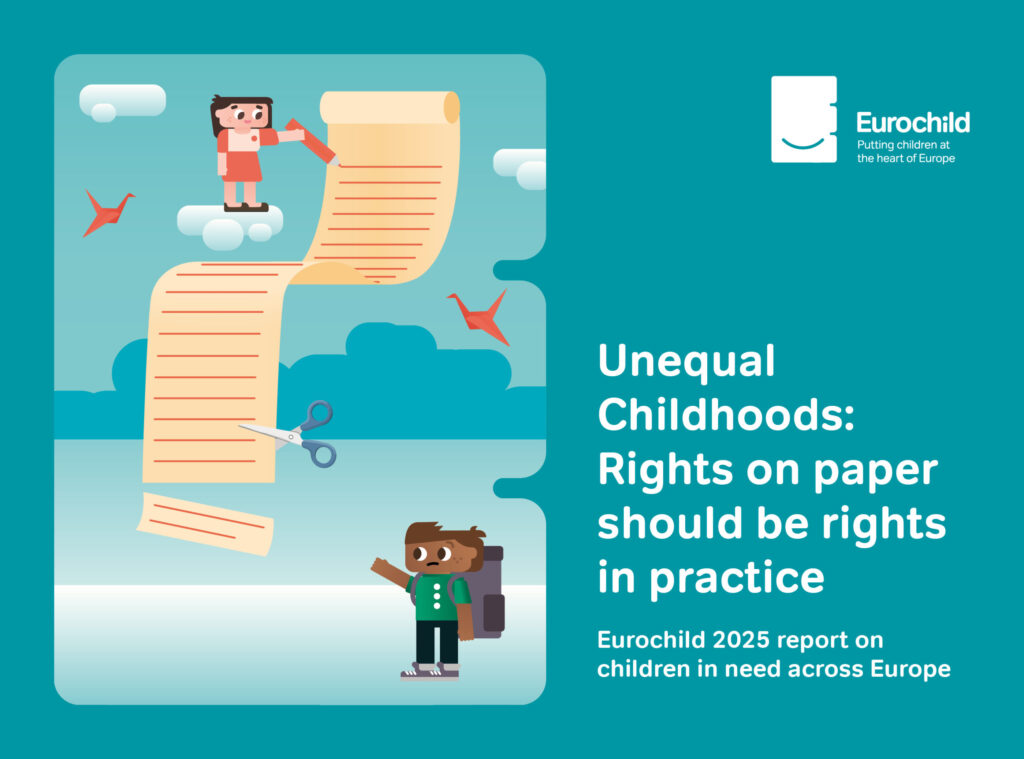
Every year, as we prepare Eurochild’s flagship Unequal Childhoods report, I am struck by the same realisation: children’s rights in Europe remain far too dependent on where a child happens to be born and on whether their government chooses to take its responsibilities seriously.
This year’s report is grounded in the contributions of 84 Eurochild members across 36 countries. They are organisations and professionals who work every day with and for children and families. Their insights are powerful, sometimes painful, and always honest. They reveal a continent where too many children still grow up in poverty, face discrimination, or struggle without the support and protection they need. At the same time, we continue to witness a rise in anti-rights narratives that undermine progress, particularly for marginalised groups. This is a reminder that hard-won rights can never be taken for granted.
In this context, the collective voice of civil society has never been more critical. Our members are not only reporting what they see, they are shaping policy debates, holding governments accountable, and offering practical solutions. Their work is at the heart of Unequal Childhoods and the report would not exist without them.
The report provides a detailed snapshot of children’s rights across Europe, focusing on issues that profoundly shape children’s daily lives. We look at child poverty, child protection systems, mental health, child participation and the growing challenges children face online. We also assess the progress of the European Child Guarantee, which remains one of the EU’s most promising tools to break cycles of disadvantage.
What makes Unequal Childhoods so valuable is not just the data it presents, but the stories and realities behind the numbers. We hear from children in alternative care, children with disabilities, Roma and Traveller children, and children with a migrant background. What do they all have in common? Their rights are often ignored or politicised. Their experiences show us where policy is working, where it is failing, and where it is simply too slow or non-existent.
One message resonates clearly throughout the report: children’s rights must be at the centre of political decision-making. This means investing in early years services, ensuring access to affordable housing, strengthening mental health support, and creating child protection systems that truly protect. It means standing up to anti-rights movements that target vulnerable children and threaten to roll back progress. And it means embedding children’s rights in the European Semester and the post-2027 EU budget, so that commitments translate into real change.
The report also highlights the urgent need for stronger cooperation between governments and civil society. Too often, grassroots organisations, those closest to children’s lived experiences, are left out of policy discussions or struggle with insufficient funding. If we want meaningful change, their expertise must be recognised, supported, and embedded in long-term planning, monitoring and evaluation processes.
As I reflect on this year’s findings, I am reminded of something I often hear, ‘children are our future’. Yes, but their childhoods are happening now. And the choices we make now shape the lives they are living right this moment.
This is why Eurochild will continue to raise its voice, push for accountability, and champion the rights of every child. Unequal Childhoods shows us the work that remains to be done, but it also shows us what is possible when we commit, together, to making rights real.
Authors