Truth protects freedom – Why democracy depends on independent journalism
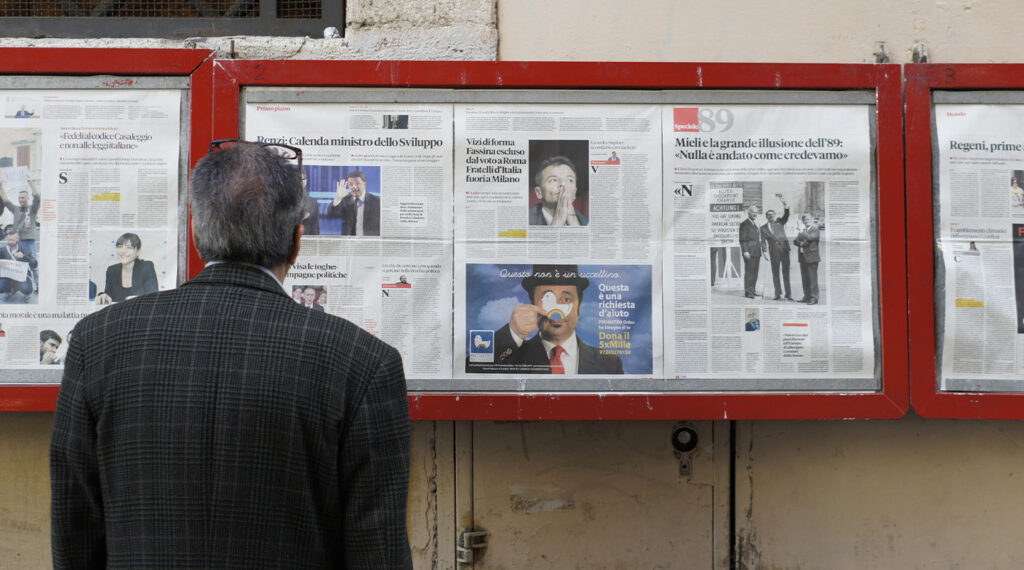
Across Europe, democracy is under increasing pressure. Declining trust in institutions, shrinking civic space and the spread of misinformation are no longer abstract risks, but lived realities. In this context, independent journalism plays a foundational role: enabling informed participation, holding power to account and sustaining pluralistic public debate.
This is not new to those active in the field.
“Journalism and Media Funding in Europe”, produced by Philea’s Journalism Funders Forum (JFF), offers a timely, evidence‑based look at how philanthropy is currently engaging with journalism – and where the gaps remain. Based on survey data from philanthropic organisations across 12 European countries, the snapshot reflects the diversity, ambition and growing urgency within the field. At the same time, it confirms what many funders and grantees already sense: journalism remains under‑resourced, fragmented and structurally vulnerable, despite its centrality to democracy.
A field funders agree on – but still fund cautiously
One of the most consistent messages emerging from the JFF’s work is the near‑universal agreement on why journalism matters. In this snapshot, funders most frequently cite protecting democracy and countering misinformation as their core motivations for supporting journalism and media. For many, this work is closely connected to broader priorities such as civic engagement, human rights and democratic resilience.
And yet, based on our sample, only 3.2% of total philanthropic expenditure is directed to journalism and media. The median allocation sits at around 6%, with most funders investing below 20% of their overall budgets in the field.
From the JFF’s perspective, this gap between conviction and commitment is one of the central tensions shaping journalism funding today.
Key learning: Philanthropy broadly agrees that journalism underpins democratic impact – but has not yet treated it as a funding priority in its own right.
Diversity of engagement
The snapshot also highlights the breadth of philanthropic engagement with journalism. Support spans investigative reporting, non‑profit media, digital and multimedia formats, innovation, tech accountability and enabling infrastructure. Funding reaches local, national and international media, reflecting the multi‑level nature of today’s information ecosystem.
This diversity is a strength – but only up to a point. From both funder and grantee perspectives, the field remains highly fragmented. Many funders operate in isolation, separated by geography, language and institutional boundaries. Grantees, meanwhile, face fierce competition for limited resources and struggle to navigate a complex funding landscape.
One of the JFF’s core reasons for commissioning this snapshot was precisely this lack of visibility: without a clearer picture of who funds what, where and how, it becomes harder to make the case for additional resources or more strategic collaboration.
Key learning: Without stronger coordination, diversity risks becoming fragmentation – reducing impact and increasing pressure on journalism organisations.
Flexibility is emerging – but still constrained
There are, however, signs of change. The snapshot shows a growing recognition among funders that journalism requires more than short‑term, project‑based grants. Many portfolios include a mix of unrestricted core support and project funding, and most funders complement financial grants with non‑financial support such as networking, organisational development and business‑model advice.
Yet grant durations remain short for the majority of respondents, and unsolicited funding is rare. For a sector facing long‑term structural disruption, this limits the ability of journalism organisations to plan, adapt and invest in sustainability. Within the JFF, these questions are increasingly central: how to move from emergency responses to long‑term resilience, and how funders can align their practices with the realities of the field.
Key learning: Flexibility is more common– but it is not yet sufficiently embedded in funding practice.
Responding to a sector in transformation
The snapshot confirms that journalism funders are acutely aware of the scale of change affecting the sector. Digital platforms, social media and AI are reshaping news production and distribution, while economic instability, declining trust and safety risks for journalists pose ongoing challenges.
Encouragingly, more than half of surveyed organisations increased their journalism budgets in 2024, and over a third expect to do so again in 2026. These increases are driven by a heightened sense of urgency around democratic backsliding and information disorder. At the same time, funders also point to internal challenges: making the case for journalism within foundations, navigating shifting strategies, and managing the unintended consequences of philanthropic volatility itself.
Key learning: Philanthropy is reacting to crisis – but coherence and long‑term alignment remain works in progress.
What the snapshot asks of philanthropy – and of the JFF community
From the perspective of the Journalism Funders Forum, this snapshot is not an endpoint, but a tool. It helps benchmark current practice, identify gaps, surface emerging trends and, crucially, support more informed peer learning.
Three implications stand out for funders engaged in – or considering – journalism support:
- Treat journalism as a cross‑cutting enabler, not a niche issue
If access to reliable information is a precondition for impact across thematic areas, journalism funding should reflect that systemic role. - Invest in conditions, not only content
Sustainable journalism requires long‑term organisational capacity, digital infrastructure and human resilience – not just individual stories. - Collaborate more intentionally
Peer learning, coordination and pooled approaches can reduce fragmentation, lower barriers for grantees and strengthen the overall funding ecosystem.
From shared concern to shared responsibility
“Journalism and Media Funding in Europe” confirms what many within the JFF already knew: philanthropy is indispensable to the future of independent journalism in Europe, but its current contribution remains fragile and uneven.
The challenge now is not to reaffirm journalism’s importance, but to act on it collectively – aligning funding levels, practices and collaboration with the scale of the democratic challenge at hand. For the Journalism Funders Forum, this snapshot is an invitation: to deepen dialogue, test assumptions and build a more coherent, resilient funding field together.
Authors