Rethinking arts funding for lasting social change
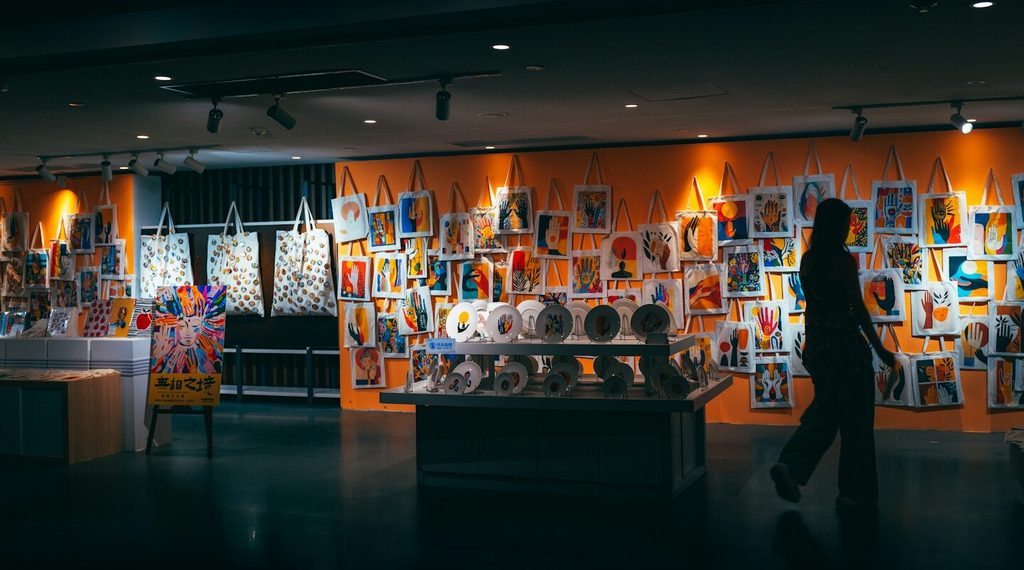
As Europe navigates a landscape of profound social and political flux, philanthropy is urgently searching for solutions to mend a fraying social fabric. It should look closer to the arts, which for centuries have been the backbone of cultural expression, social participation and political action across Europe.
Socially engaged arts is the umbrella term for the range of artistic practices, from ‘community arts’ to ‘artivism’, that contribute to the distinct forms of systemic value and long-term social change. As a field of practice, socially engaged arts put communities at the centre, creating a cultural and civic space for the expression of ideas. They create opportunities for people to feel seen and heard, enabling them to express their needs and activate the practical and imaginative capacities needed to envision and realise alternative futures.
In a time of social and political polarisation in Europe, this field is growing as more people turn to their community and to the arts in search of connection and trust. Our Alliance’s first published report, Constellations of Change, mapped 1,128 socially engaged arts organisations across 39 European countries and we know that many more exist beyond the scope of the research.
The findings show that socially engaged arts cultivate the social infrastructures required for long-term systemic change, generating impact at multiple, interconnected levels. At a personal level, they support confidence, wellbeing, skills development and civic participation. At a relational level, they build trust, strengthen networks and create spaces where communities can collaborate. At a structural level, they enable communities to challenge inequities, shift power dynamics and influence the systems that shape their lives. In doing so, socially engaged arts contribute not only to addressing social challenges but also to reshaping the conditions that produce them.
But despite their growing contribution, there are a number of challenges holding the field back from realising its full potential impact. The most significant is with how the field is funded.
As we all know, systemic social change does not happen overnight. It requires sustained engagement, long-term relationship building, experimentation and collaboration, with progress emerging gradually through shifts in trust, power and collective capacity. Yet much of the funding available to socially engaged arts remains tied to short-term project cycles and predefined outcomes.
This is the crux of the problem. The changes socially engaged arts seek to create unfold over time and are not easily captured through immediate project outputs. Measuring success in this way can therefore be difficult and, at times, counterproductive. They rarely fit within a single grant cycle, making longer-term funding essential to sustaining relationships, maintaining momentum and ensuring that hard-won progress is not lost just as it begins to take root.
Funding is consistently identified as one of the most significant challenges facing socially engaged arts organisations, with 79% of organisations citing funding as a key challenge. The issue is not simply the availability of resources, but whether funding structures are aligned with the realities of the work itself. And whilst philanthropy has long valued operational efficiency, could the very mechanisms through which it funds be creating inefficiencies of their own, limiting the impact it hopes to achieve?
‘united tbilisi’ in Georgia underpins the challenge many organisations face. Uniting artists and activists from across the South Caucasus region, they support women, queer and other marginalised groups through regional and international art projects. From festivals, exhibitions, performances, screenings and educational programmes, they play a valuable role advancing human rights discourse and creating platforms for communities that are frequently excluded from institutional representation.
However, due to the nature of their work, they operate under acute precarity: stigmatised as a “foreign agent” and excluded from the prospect of long-term funding from public institutions. While unrestricted support can exist through international foundations, such opportunities remain limited and highly competitive.
Across Europe, many organisations face similar pressures, including political hostility and shrinking civic space and financial insecurity. For many communities, socially engaged arts is a vital route by which people can ensure their voices are heard and can participate in driving change. Multi-year, trust-based funding gives organisations the stability needed to respond to changing circumstances, whilst sustaining relationships and continuing to support communities through periods of uncertainty.
It should be acknowledged that project-based grants of course hold a clear value. But, for socially engaged arts organisations in particular, without the foundation of long-term funding for the field, these grants can end up creating additional administrative burdens, with short grant windows directly undercutting the enduring relationships necessary for success, leaving organisations in a cycle of continuously aligning their priorities, language and outputs to fit shifting funding priorities. All of these adjustments take up the time and resources that community-based organisations don’t have.
What is needed are funding structures that better reflect how socially engaged arts create the conditions for change. This means complementing project grants with more flexible forms of support, including seed funding for relationship building and early-stage development, core organisational funding and longer-term investment that recognises the time required for community engagement, experimentation, learning and systemic change.
The early experiences from our inaugural Fellowship demonstrate the value of this approach: Fellows have used flexible support to strengthen organisational resilience, build relationships, trial new approaches and create space for strategic reflection after years of resource-constrained growth. While these outcomes may be less visible than project outputs, they are often the foundations on which longer-term and more systemic change is built.
It is true that the drive for long-term funding is nothing new – it’s what many organisations have been calling for. But, in the current context of increased social and political polarisation, building community resilience, local capacity and meaningful social transformation is arguably one of the most significant contributions philanthropy can make.
By developing funding models that are more flexible, trust-based, and aligned with systems change principles, philanthropy can help socially engaged arts organisations build the relationships, infrastructure and resilience needed to respond to complexity of our times and contribute to lasting change across Europe.
Authors