Just Transition: A new attempt to square the circle
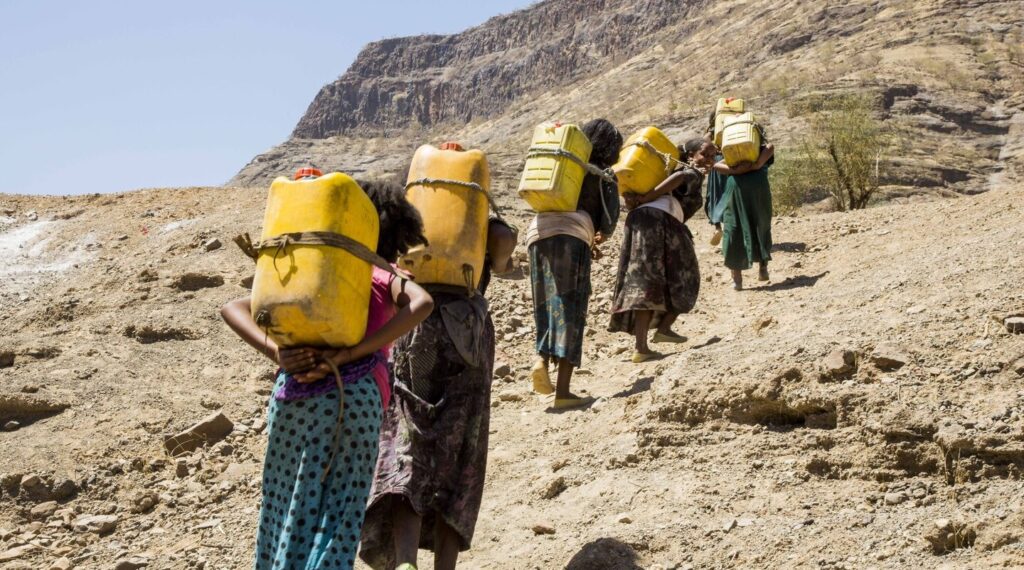
The climate crisis is an existential challenge for humanity in the 21st century. In addition to its environmental, economic and political consequences, this crisis also raises fundamental questions about justice, responsibility and the universal human right to a habitable planet. These questions are addressed through a concept known as a “just transition.” The idea is that we need to change how we power our world, but we need to do it in a way that’s fair to the people whose livelihoods depend on the old system.
Is this possible? Yes – but only with great effort. A just transition is an aspirational concept that is best viewed as a direction rather than a destination. It’s a direction that centres equity, aims to ensure those most affected have a say in decisions and leaves room to correct course. Though a just transition is too complex to ever be a linear pathway, it’s still a direction we can – and must – take to ensure the well-being of future generations.
The toll of rising temperatures
The last three years have been the warmest on record, reaching almost 1.5°C above preindustrial times. We are getting close to the warming limit climate science tells us that we should respect as a boundary; once we go beyond it, we are leaving the known sphere of how life works on this planet.
It is predicted that extreme weather events will increase worldwide due to global warming. Already, we’re seeing record-breaking winter wildfires in California, a Swiss village disappearing under a collapsing glacier, a record-high number of more than 100 hurricanes in the Atlantic, one of the wettest monsoon seasons in Asia and record-long droughts in Africa. And with a billion people living within 10 meters of the ocean, the speed of sea level rise is of paramount concern.
While the causes of global warming have long been known – with the largest driver being the carbon dioxide released from the burning of fossil fuels – the solutions are less straightforward. Our global economic system is based on fossil fuels. It’s also based on the assumption that environmental resources such as air, water and soil are largely available for free and may be consumed and polluted by whoever is the first, the fastest or the strongest to gain access. This system entrenches and amplifies existing inequality.
The circuitous route toward solutions
There are numerous attempts worldwide to make meaningful progress in the fight against climate change. A few countries are actively driving the phase-out of fossil fuels and restructuring their economies. There are also many innovative players, from academia to small businesses to NGOs, who are seeking new solutions for environmentally friendly and zero-emission products and energy sources.
But we frequently see that initiatives to reduce emissions end up producing negative consequences in other areas. For example, reforestation projects aimed at generating carbon credits may harm pastoralist communities by reducing the land they currently rely on for grazing. Or consider hydropower, which can be a valuable source of clean energy, but often alters river flows, raises water temperatures and reduces the availability and quality of water for downstream communities.
It’s hard to overstate the complexity of trying to shape policy and practice that can meet today’s needs and tomorrow’s. Here’s an example of the many factors that must be considered to activate a just transition: Clean renewable energy needs an initial investment, which low-income countries cannot afford. It is also logical that they want to be supported in this transition effort by the Polluter Pays Principle, which says the costs of polluting activities should be borne by those who caused it. Even if a country has the financing to go “green,” people will lose existing jobs when entire sectors of the economy are restructured. Those affected need support in further training and job integration; otherwise, there’s a high risk of social unrest.
With such a fraught and unclear path forward, what is the added value of still pursuing a just transition? The concept is not new, but it is more relevant than ever since it deals with the challenging question about how societies can navigate structural transformations in a fair, inclusive and democratic manner.
So how do you square the circle?
Philanthropy’s role in a just transition
In a complex situation, quick fixes are poison. It takes well-founded, practice-oriented thinking to combine ecological, economic, social and political aspects in an initiative in a congruent way.
As a climate advisor for Helvetas, a Swiss non-profit working in international development cooperation, I’ve observed some donor patterns and norms that are not yet aligned with the complexity of this endeavor. Here are four ways philanthropy could play a key role in supporting equitable and just transitions:
- Create longer timelines for project design and delivery. The initial phase of a project, though time‑bound, is a critical investment period. It enables the formation of strong research and implementation partnerships and the piloting of approaches that shape future results. When donors explicitly acknowledge that this timeframe should not be rushed, projects are better positioned to deliver sustainable impact.
- Leave room for project plan adaptation. This can be achieved by supporting rolling workplans that allow teams to refine activities, timelines and resource allocation as conditions evolve and new information emerges – necessities given the complex linkages of a just transition. Aim for continuous improvement by building regular learning cycles, which creates space for grantees to make evidence-informed adjustments without a fear of penalties.
- Embrace blended finance models. Low-income countries will need an investment boost to shift toward clean and renewable energy sources. Foundations can provide the catalytic capital that helps de-risk investments and attract more private sector funding.
- Decrease the focus on data. The systemic change required for a just transition is a gradual process that is unlikely to produce impressive short-term metrics. Funders of these initiatives should emphasise trust-building, community leadership and learning.
Building momentum through small wins
A just transition remains an ambitious concept – and that’s ok. As global temperatures keep rising and the consequences of climate change become more prevalent, it’s more relevant than ever to keep developing a shared framework for making changes to how we power our world. And the costs of changing familiar systems and structures must not be borne by the most vulnerable groups and people.
I’ve worked with communities across the globe for almost three decades on resilience, disaster risk reduction and climate change adaptation initiatives. The challenges to move towards a just transition are manifold, but so are the solutions. And my hope is sparked by encouraging progress points – such as 66 countries now including the just transition concept in their national climate plans. It’s especially important that we keep this conversation going amongst funders and policymakers, ensuring that supporting a just transition is seen as a priority. The upcoming Philea Forum in May provides a timely platform to rethink the just transition, going beyond familiar conversations to examine how philanthropy can move from reflection to action, turning insights into tangible initiatives and real-world solutions.
Authors