How Ukrainian society gives under full-scale invasion
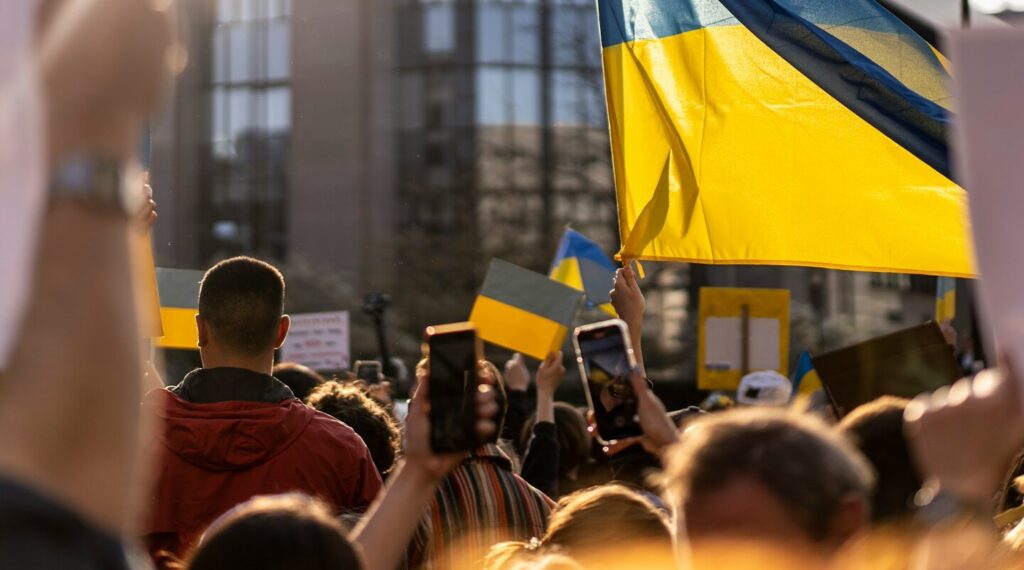
2025 marked the fourth year of Russia’s full-scale invasion of Ukraine. In that time, thousands of new charitable organisations have emerged, hundreds of thousands of international donors have engaged, and the country’s culture of giving has grown considerably. Yet experience from other countries that have navigated prolonged crises shows that relying solely on international resources is not enough – building domestic capacity and broadening civic participation in philanthropy matter just as much.
That’s why, in 2024, the National Network of Local Philanthropy Development launched an annual research of philanthropy in Ukrainian society. In 2025, we published its second wave – “Ukrainian Philanthropy 2025: Who Gives, How and Why”, to track shifts, identify trends and better understand how Ukrainians engage with giving. What follows are the key findings.
What “philanthropy” means to Ukrainians today
During the research, we asked respondents an open question: “How would you describe the act of giving your resources (money, time, material goods, etc.) for the public good?” The answers varied widely. In 2024, no one used the word “philanthropy” in response. In 2025, however, some did. Overall, 56% of Ukrainians said they are familiar with the concept.
The share of people who consider themselves philanthropists is staying stable at 17% while there are meaningful shifts within that figure: among adults aged 26–45, the share has grown (see below). This is an economically active generation, and its growing identification with the concept has a significant meaning for the Ukrainian philanthropy sector.
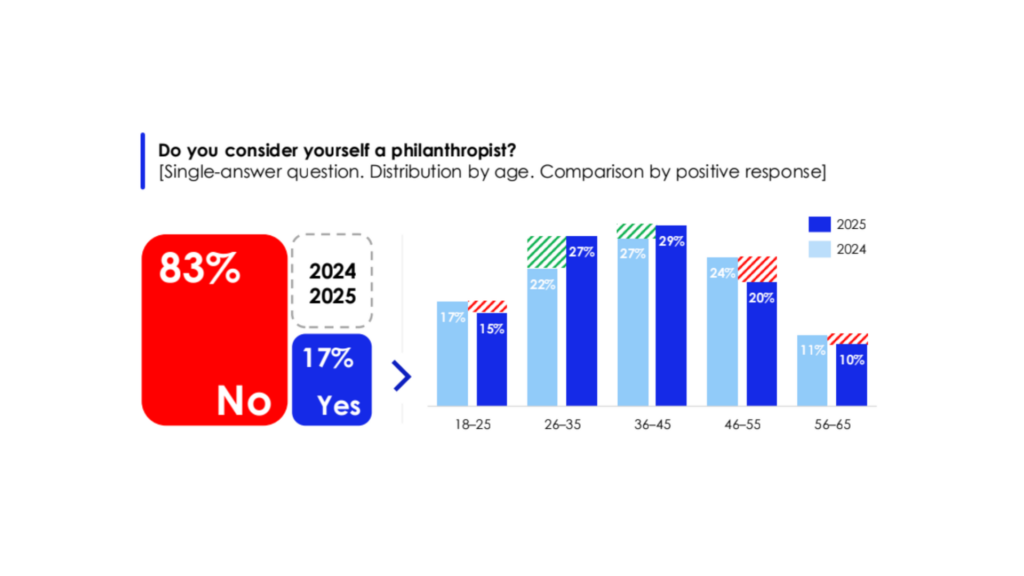
The word “philanthropy” is not commonly used by Ukrainians. That is precisely why we track its spread: it correlates with a deeper, more systemic understanding of what it means to support society, not just responding to immediate needs, but investing in long-term change.
The participation paradox: broad, but less consistent
76% of respondents reported giving some form of resource (money, goods, or time) at least once during 2025. That figure is striking, particularly given the economic pressure and widespread fatigue. Though there is a nuance to consider: 21% of respondents reduced their philanthropic activity in 2025 compared to 2024, while 54% maintained the same level, and 14% reported an increase (see below).
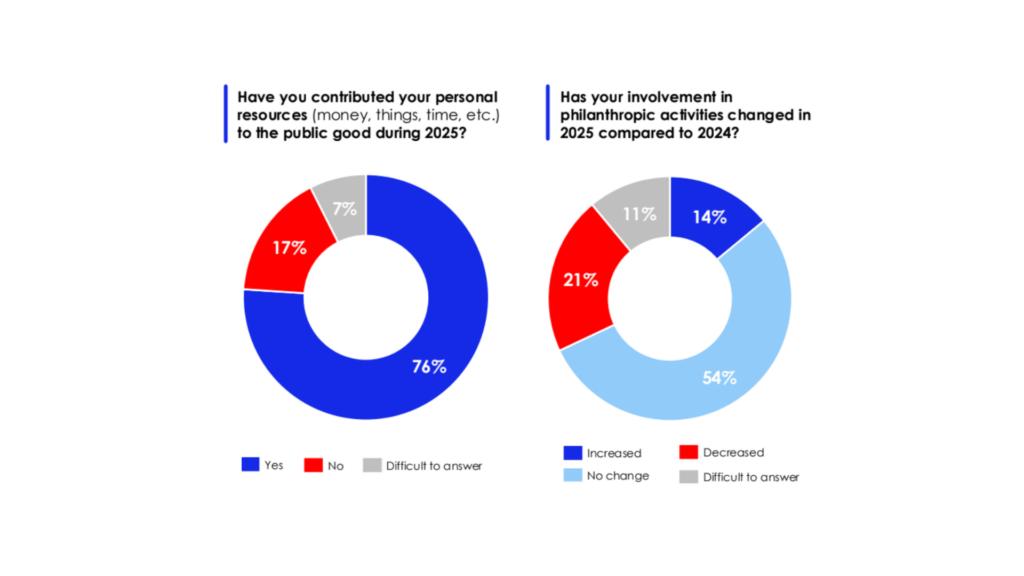
The share of those giving regularly remained almost unchanged at 38%. Taken together, these figures suggest a culture of giving that remains wide but is becoming more fragile at the edges – stretched by economic hardship, sustained by habit and values, but in need of conditions that make regular participation feel possible rather than heroic.
The main reasons for declining participation include financial constraints (61% of respondents cited this as a barrier), emotional burnout and fatigue from constant donation requests. 21% of respondents reported experiencing a high level of exhaustion from regular philanthropic engagement. This is important to acknowledge: Ukraine’s culture of giving is not developing in a vacuum, but under immense demands to sustain the country’s very survival.
Trust: fragile, but decisive
More than anything else, trust is what determines whether people choose to support an organisation. 76% of respondents named transparency in the use of funds as their primary criterion for choosing whom to support. 56% say directly that if they have doubts about an organisation’s transparency, they will not give (see below).
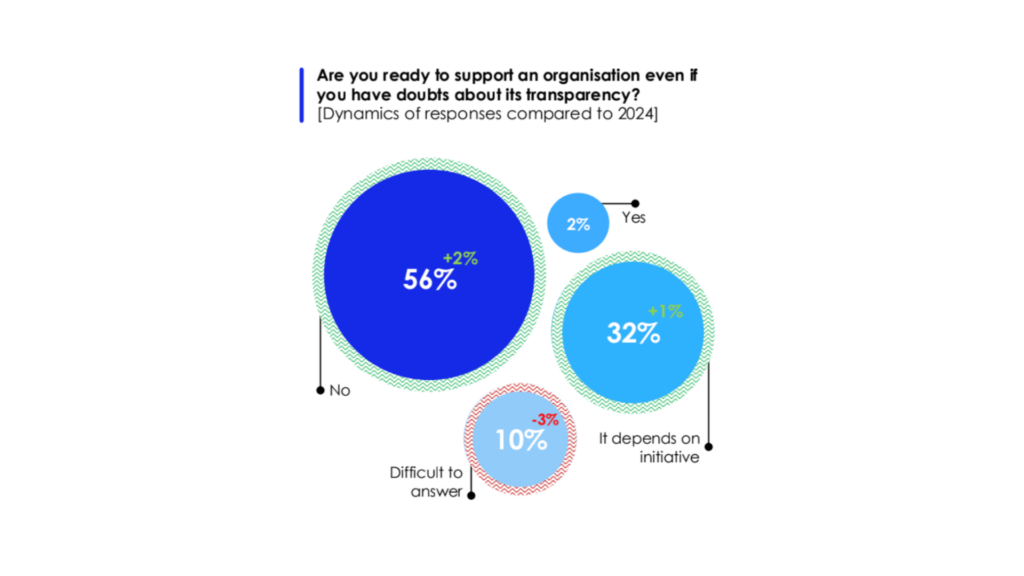
High-profile scandals involving misuse of funds have become a significantly stronger deterrent than a year ago. 48% of respondents say their first reaction to a donation appeal on social media is to verify information about the organisation. This is the careful instinct of a society that has learned to treat limited resources with responsibility.
The choice of organisation also tells a story: those with a clearly defined area of work remain the top preference, while local and international organisations share second place equally. In the public mind, local civil society now stands alongside major international structures, not beneath them.
The role of philanthropy in the country’s future
77% of respondents consider philanthropy important or critically important for Ukraine’s development. Behind that number is a recognition that reconstruction cannot rest on the state or international donors alone. “Philanthropy is a direct investment in the future – my future, the future of my community, the future of my children,” said one focus group participant. At the same time, most respondents see philanthropy’s impact as most effective in combination with other institutional mechanisms, not as a standalone force. This is a realistic assessment, and also a signal to the sector: Ukrainian philanthropy could become considerably more powerful with a more enabling environment, clearer frameworks and stronger partnerships with government and business.
In place of a conclusion
Ukrainian philanthropy in 2025 is not giving from abundance. It is a choice people make despite fatigue, limited resources and shrinking external support. Moreover, it is a widespread choice: three-quarters of the adult population contributed some of their resources this year.
For Europe’s philanthropic community, Ukraine is not simply a recipient of support. Under existential pressure, Ukrainians are shaping our own model of solidarity that is local, personal and rooted more in trust than in formal structures. Understanding that model and engaging with it as an equal may be one of the most important ways Europe can support Ukraine’s recovery. Not only financially, but institutionally: by strengthening the very conditions in which this culture of giving can become lasting.
Authors