
Four lessons from Philea’s Organisational Development journey
If philanthropy expects grantees to respond to growing complexity, it must invest not only in what they deliver, but also in their ability to adapt, learn, care for people and sustain their mission. Philea’s own journey shows that this work is interconnected, non-linear and impossible without patient, flexible support.
Four and a half years of Philea have taught us how structures, practices, culture, relationships and learning intersect – and how complex organisational change can be. It is a story about people who believe that long-term, incremental improvement is worth investing in. It is also a story that would not have materialised without a committed group of funders who believe that investing in Philea as a backbone is at least as important as investing in how we service their individual needs.
Philea was born against the backdrop of the Covid-19 pandemic. Bringing together the European Foundation Centre (EFC) and Dafne required members, governance representatives and funders to recognise the value of a stronger collective voice for European philanthropy. Philea emerged from that conviction, carrying both the opportunities and challenges of an ambitious organisational transformation.
Not everyone was convinced from the outset. Some members worried that rethinking the structure would distract us from delivering what they needed. They held back and waited to see what would emerge before re-engaging. As we navigated a pandemic alongside a merger and a cost-of-living crisis, asking people to trust the process was a significant request.
Others chose to do the opposite: to lean into the process with funding, patience and care. Some supported the transition from EFC and Dafne to Philea. Others supported joint advocacy efforts and organisational work, creating space for teams to learn from each other and join forces.
Building blocks of our organisational development journey
From the outset, developing Philea was conceived as a participatory endeavour involving members, staff and critical friends. Participation was not simply a consultation method. It was part of the organisational development itself.
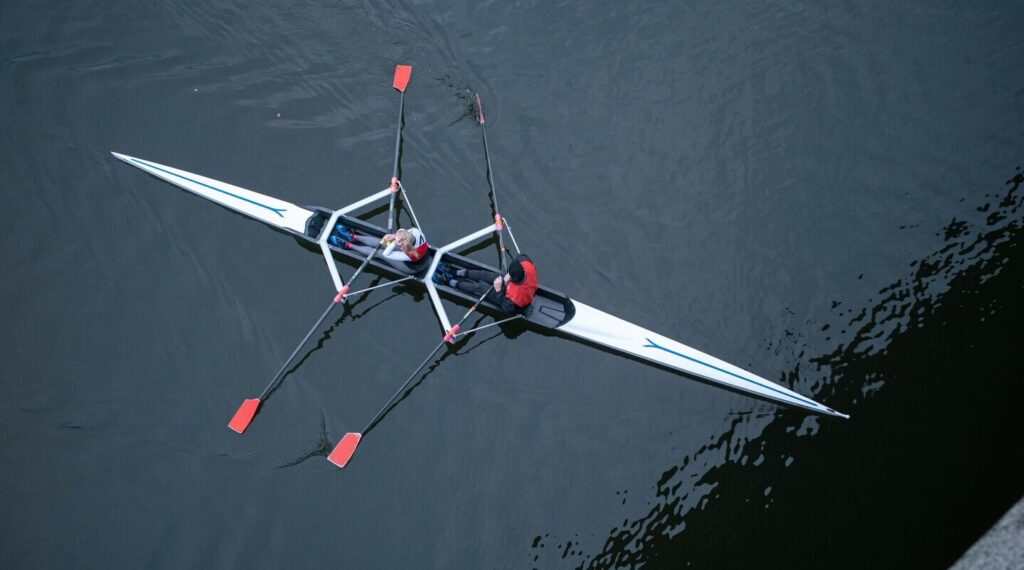
Establishing Philea was an effort in building a boat while sailing. We were defining strategy while redesigning governance, bringing teams and organisational cultures together, strengthening systems and continuing to deliver to members. Core and flexible support gave us room to work through these uncertainties.
1. People, leadership & culture
While the merger required new structures, its success depended on the quality of relationships.
A critical early step was defining a shared set of values. The values continue to guide the organisation today, particularly when navigating difficult choices about priorities, approaches and ways of working.
The values were translated into a co-created culture manifesto articulating the behaviours and attitudes underpinning Philea’s work.
Alongside this, a deliberate leadership model emerged. Reflecting the collegial spirit of the convergence process, Philea adopted a relatively flat structure.
Over time, investment in leadership, staff development and well-being became an important part of strengthening the organisation from within. As is the case for many in the sector, Philea has had colleagues struggle with mental health and stress-related issues. While this is not something we can prevent at all times, it is a fact we want to acknowledge and as much as possible prevent and support.
Relationships, values and leadership culture are difficult to capture in KPIs or measurable outputs required in most grant reporting templates.
2. Strategy
The definition of Philea’s vision, mission and strategic framework came only months after the formal creation of the organisation. Our development could only move at the pace of trust.
A retreat bringing together governance bodies and the Executive Office, followed by a listening tour with members, resulted in a five-year strategic framework.
Importantly, the strategy did not focus solely on external impact. The ambition to be a caring, learning and resilient organisation was embedded as a strategic goal in its own right.
Members consistently report that the sense of community, the quality of relationships and opportunities for peer exchange are what they value most.
Delivering on this part of the strategy was supported by flexible, unrestricted funding that strengthened organisational capacity and resilience.
3. Structures & systems
Beyond culture and strategy, the merger required a substantial rethink of governance and organisational structures. New governance bodies were established with clear roles and mandates.
A shared commitment emerged around a governance philosophy centred on five principles: strategy, stretch, stewardship, scrutiny and support.
Step by step, investment was made in internal systems and processes. Financial management practices were harmonised, operational processes strengthened and technology introduced to support collaboration, consistency and sustainability.
Instrumental in achieving this progress has been the support of funders who included organisational efficiency, effectiveness, policies and systems in their flexible core grants.
Four and a half years after the merger, Philea has now recently welcomed its first Chief Operating Officer.
4. Ways of learning
A defining characteristic of Philea’s organisational development journey has been its commitment to learning as an ongoing practice.
The listening tour became part of how the organisation works, creating regular opportunities to hear from members and adapt accordingly.
Internally, learning has also involved creating the conditions for knowledge sharing across teams and functions. Progress has been steady, with investments in ERP and CRM systems, staff development and collaboration.
Lessons learned about the work beneath the surface
Since its creation, Philea has grown in members, partnerships, activities, staff and budget. Yet the most consequential work often lies in what is less immediately apparent: building systems, developing leadership, nurturing culture and creating the conditions in which people can learn and work well together. It is difficult to capture in output-based projects, yet it underpins everything else.
Four and a half years of Philea have taught us that:
- Growth requires investment in internal capacity as well as external delivery
- Organisational rigour is worthless without care and compassion
- Funding models shape organisational resilience and effectiveness
In times of uncertainty and disruption, the infrastructure supporting philanthropy matters more, not less. In this context, philanthropy is best served by a Philea that can act as a strong backbone for the sector.
That backbone will need further nurturing. Over the coming years, we will continue strengthening it by investing in our operations, reviewing our operating and funding model, and centring care throughout that process.
None of this, however, will be achievable without funders who understand the importance of organisational development and provide partners with the bandwidth needed to build their boat while sailing. This article is a shortened version of a piece prepared for the Funding Organisational Development: From Insight to Action guide, drawing on the work of Philea’s Organisational Development Community of Practice.
Authors
